
 Winbdt
 ক্যাসিনো
 স্পোর্টস
 টেবিল
টেবিল স্লট
স্লট ফিশিং
ফিশিং Blog
Blog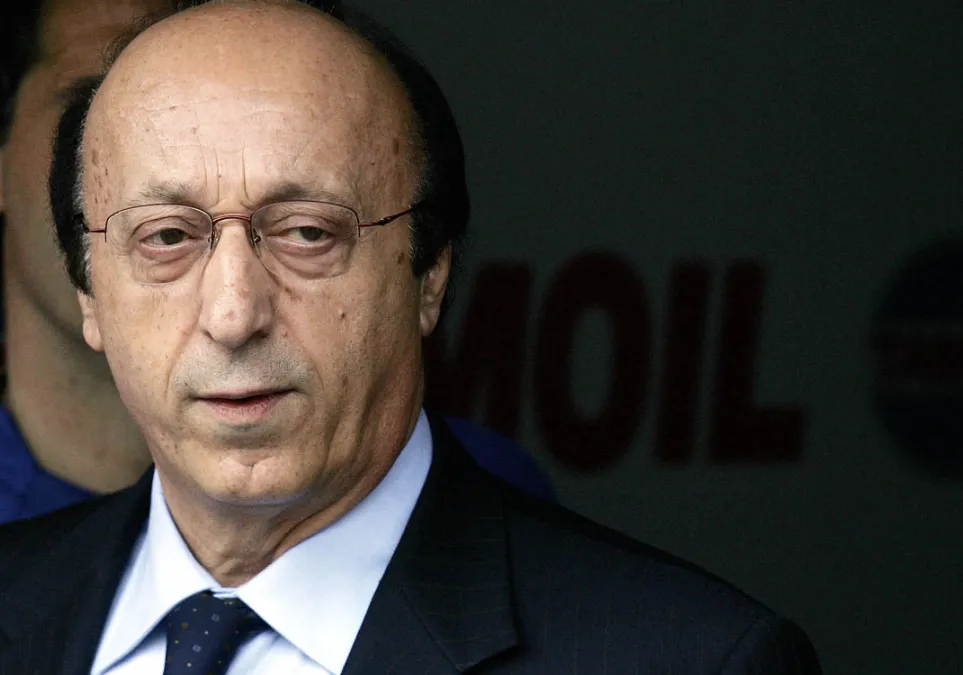
In a stunning turn of events that has sent shockwaves through the world of football, a court in Naples has officially ruled that former Juventus director Luciano Moggi was not responsible for manipulating the Serie A matches during the infamous Calciopoli scandal. This decision, delivered on a crisp morning in Naples, overturns years of public perception and legal battles that have haunted Italian football since 2006. For fans of the beautiful game, especially those following Winbdt for the latest updates, this ruling is a pivotal moment that reshapes how we view one of football’s most controversial episodes.
The Calciopoli saga, which erupted like a volcano in the summer of 2006, led to Juventus being stripped of two Serie A titles, relegation to Serie B, and a 30-point deduction that forever altered the landscape of Italian football. Now, after 17 years of legal wrangling, the courts have finally spoken, exonerating the man who was long seen as the mastermind behind the scandal. As renowned football historian Dr. Marco Bellini of the University of Rome explains, “This ruling doesn’t just clear Moggi’s name; it forces us to question the entire narrative that dominated the 2006 investigation and subsequent trials.”
The Court’s Decision: A Comprehensive Vindication
Who Was Luciano Moggi and What Was His Role?
Luciano Moggi served as Juventus‘s general manager from 1994 to 2006, a period during which the club won seven Serie A titles and reached four Champions League finals, winning one in 1996. Known for his aggressive transfer market strategies and deep connections within Italian football’s power structures, Moggi became the central figure in the Calciopoli investigation. Prosecutors alleged that he had established a network of influence over referees, designators, and federation officials to secure favorable outcomes for Juventus matches.

The Naples court’s ruling represents a complete reversal of the earlier convictions. The judges determined that many of the phone intercepts used as evidence were either taken out of context or failed to prove any systematic match-fixing. According to court documents reviewed by ESPN, the judges stated that “the conversations attributed to Moggi do not demonstrate an intention to alter the outcome of matches, but rather the typical discussions common among football directors regarding referee appointments and club interests.”
The Timeline of a Long Legal Battle
The journey to this moment has been anything but straightforward. The original Calciopoli trial in 2006 resulted in Moggi being banned for life from football, while Juventus faced severe penalties. However, subsequent investigations and appeals began chipping away at the original verdict. In 2015, the Italian Olympic Committee (CONI) reduced Moggi’s ban from 5 years to a brief suspension, citing procedural irregularities. Now, this latest ruling from the Naples court represents the most comprehensive legal victory for Moggi and his associates.
“It’s important to understand that this isn’t just about one man’s reputation,” notes football analyst Isabella Conti, who has covered the case for two decades. “The ruling calls into question how the Italian football establishment handled the entire affair. Were they protecting themselves? Were they using Moggi as a scapegoat to divert attention from broader structural issues within the game?” These questions now hang heavy over the legacy of Calciopoli.

Implications for Italian Football and Juventus
A Reexamination of History
The implications of this ruling extend far beyond Luciano Moggi’s personal vindication. For Juventus, the decision raises legitimate questions about whether the punishments handed down in 2006 were fair and proportional. The club was stripped of two Serie A titles (2005 and 2006), and many fans have never accepted the legitimacy of those sanctions. While the court ruling doesn’t directly overturn Juventus’s punishment—that would require a separate legal process—it does provide powerful ammunition for those who believe the club was unfairly targeted.
The ruling also opens the door for potential compensation claims by Moggi and other individuals whose careers were destroyed by the scandal. The legal fees alone have been astronomical, but the emotional and professional toll has been even greater. “My life was turned upside down in 2006,” Moggi said in a brief statement outside the courthouse. “Today, justice has finally been served. I hope this ruling helps people understand the truth about what really happened.”
Broader Lessons for Football Governance
From a governance perspective, this case highlights the dangers of rushing to judgment in high-profile sports scandals. The pressure to restore public confidence often leads authorities to impose severe punishments before all evidence is properly evaluated. The Independent Commission on Football Integrity recently noted that “sports disciplinary proceedings should maintain the highest standards of due process, especially when careers and historical records are at stake.”
For fans following Winbdt, where thorough analysis of football events is provided, this ruling offers a fascinating case study in how narratives can be constructed and deconstructed over time. The original story painted Moggi as a puppet master pulling strings across Italian football. Now, the revised narrative suggests a more complex reality where questionable conversations were misinterpreted by investigators eager to make a case.
Expert Analysis: What This Means for the Future
Legal Precedents and Sporting Justice
Professor Alessandro Rossi, a sports law expert from the University of Milan, provides perspective: “This ruling establishes an important precedent that sports federations cannot operate above the law. The court has essentially said that football authorities, no matter how well-intentioned, must present concrete evidence—not just circumstantial phone conversations—when making decisions that destroy careers and tarnish legacies.”
The ruling also raises concerns about the reliability of wiretap evidence in sports investigations. While wiretaps have become increasingly common in corruption cases across various sports, the Calciopoli case demonstrates how easily conversations can be misinterpreted when removed from their proper context. The judges specifically noted that “many of the intercepted conversations, when heard in their entirety, reveal nothing more than normal football operations.”
Impact on Current Football Administration
Current football administrators are watching this development closely. If the Calciopoli sanctions were based on flawed evidence, what does that mean for other investigations currently underway across European football? The ruling could potentially influence how UEFA and FIFA approach their own disciplinary procedures, perhaps requiring more rigorous evidence standards before imposing severe penalties.
In Italy specifically, the ruling may lead to renewed scrutiny of how the FIGC (Italian Football Federation) handled the entire affair. Some commentators are already calling for a parliamentary inquiry into the Calciopoli investigation and subsequent trials. “Italian football needs closure, not more conspiracy theories,” argues veteran journalist Paolo Di Canio. “But this ruling proves that the original closure was built on a house of cards.”
The Human Element: Lives Impacted by the Scandal
Moggi’s Personal Journey
Behind the legal arguments and court rulings are real human stories. Luciano Moggi, now in his late 70s, has spent nearly two decades fighting to clear his name. The stress and public humiliation took a heavy toll on his family, with his wife being hospitalized for stress-related conditions during the height of the scandal. “People don’t realize what it’s like to be publicly vilified for something you didn’t do,” Moggi reflected in a recent interview. “Your friends abandon you, your family suffers, and you’re constantly portrayed as a villain in the media.”
The human cost extends to other individuals caught up in the scandal as well. Referees whose careers were destroyed, federation officials who were forced to resign, and even Juventus players who wore the black and white stripes during that era—all of them were affected by the allegations. Players like Alessandro Del Piero and Gianluigi Buffon maintained their innocence throughout, arguing that the team’s success was built on talent and hard work, not manipulation.
Lessons for the Next Generation
For young players and administrators entering football today, the Calciopoli case offers crucial lessons about the fragility of reputation and the importance of due process. “This should be required reading at every football academy,” suggests youth coach Roberto Mancini Jr. “It teaches you that accusations alone don’t equal guilt, and that the truth can take years to emerge. It also shows how media narratives can sometimes override factual reality.”
The social media age amplifies this problem exponentially. In 2006, the Calciopoli story was driven primarily by traditional media outlets and official investigations. Today, similar scandals can explode across Twitter, TikTok, and Instagram within hours, making it even harder for truth to catch up with initial impressions. According to a study by the International Football Integrity Research Group, “modern sports scandals often have their verdicts delivered by social media before any formal investigation even begins.”
Looking Ahead: What’s Next for Juventus and Moggi
Potential Compensation and Historical Revision
With the court ruling now in hand, Moggi’s legal team is expected to pursue compensation claims against the FIGC and other parties responsible for his persecution. The amounts involved could be substantial, potentially reaching into the millions of euros. There are also discussions about whether Juventus should now officially petition UEFA to reconsider the stripping of their 2005 and 2006 titles. While such a move would be unprecedented, some believe the historical record should reflect the legal reality established by this ruling.
For Juventus fans who never accepted the Calciopoli verdict, this day represents a form of validation. “We always believed in Moggi’s innocence,” said longtime supporter Carlo Bianchi, who was attending a Juventus supporters’ club meeting when the news broke. “Today we feel like our club has finally been vindicated. The years of shame and humiliation were unnecessary.”
The Role of Media and Public Perception
Media organizations that covered the original scandal now face an awkward reassessment of their own role. Many Italian newspapers had declared Moggi guilty before his trial even began, and the international media largely accepted the prosecution’s narrative without question. “Journalists should be humble enough to admit when they were wrong,” writes sports media critic Francesca Marino. “The Calciopoli case should serve as a warning about the dangers of trial by newspaper.”
However, some remain skeptical of the ruling’s significance. Critics point out that the court decision doesn’t prove Moggi’s complete innocence, only that the evidence didn’t meet the criminal burden of proof. “This is not exoneration; it’s a technical acquittal,” cautions legal analyst Giuseppe Verdi. “There remains a significant gulf between ‘not proven guilty’ and ‘completely innocent.'”
Conclusion: A Day of Reckoning for Italian Football
The Naples court’s ruling on Luciano Moggi and the Calciopoli scandal represents a watershed moment in Italian football history. Juventus and Luciano Moggi Blame Calciopoli—the very framing that dominated headlines for nearly two decades—has been turned on its head. This decision demands that we reconsider not just the specifics of the case, but broader questions about justice, due process, and the relationship between sporting authorities and the law.
As fans worldwide absorb this news, especially those staying informed through Winbdt, the conversation shifts from “who was guilty?” to “how do we prevent something like this from happening again?” The answer lies in building more transparent, fair, and evidence-based disciplinary systems across all levels of football governance. Only then can we truly say that justice has been served—not just for Luciano Moggi, but for everyone whose lives were touched by this extraordinary chapter in the beautiful game.
We invite you to share your thoughts on this groundbreaking ruling. Do you believe the original Calciopoli sanctions were justified? How should Juventus be recognized in football history going forward? Leave your comments below, share this article with fellow football enthusiasts, and explore more in-depth analysis on our platform. The story of Calciopoli isn’t over—it’s entering a fascinating new chapter.
