
 Winbdt
 ক্যাসিনো
 স্পোর্টস
 টেবিল
টেবিল স্লট
স্লট ফিশিং
ফিশিং Blog
Blog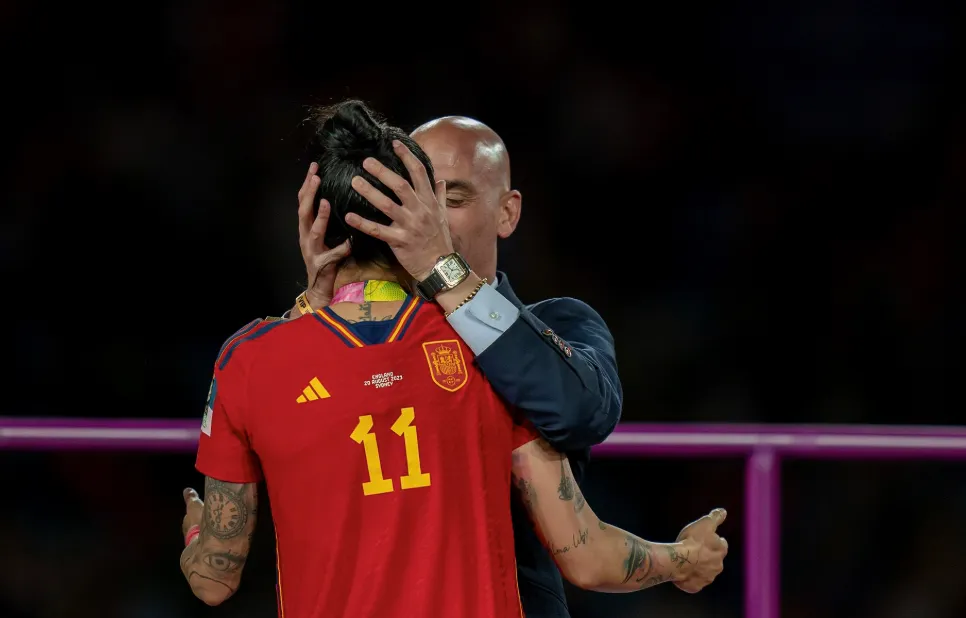
In the world of football, moments of triumph are often celebrated with passion and joy, but when those celebrations cross the line into disrespect and misconduct, they reveal deeper societal issues. The recent controversy surrounding former Spanish Football Federation President Luis Rubiales has sent shockwaves through the sporting community, drawing sharp criticism from players, fans, and activists worldwide. Among the most vocal critics was US women’s football legend Megan Rapinoe, who described Rubiales’ behavior as a clear signal of the deep-seated misogyny and sexism plaguing the sport. This analysis, brought to you by Winbdt, explores the incident, its broader implications, and what it means for the future of gender equality in football.
Who Was Involved in the Incident?
The controversy centers on events that took place during the 2023 FIFA Women’s World Cup final, where Spain defeated England 1-0 to claim their first title. The immediate aftermath of the match saw Luis Rubiales, then president of the Royal Spanish Football Federation (RFEF), engage in a series of actions that sparked global outrage.
The Key Figures
- Luis Rubiales:The former president of RFEF, who was initially praised for supporting the women’s team but later faced intense backlash for his behavior during the medal ceremony. His actions included kissing player Jenni Hermoso without her consent and grabbing his crotch in the VIP area while standing near Queen Letizia of Spain and her daughter.
- Jenni Hermoso:The Spanish forward who was a key player in the tournament and the recipient of the unwanted kiss. She later stated that she “did not consent” to the act, triggering a wave of support from the global football community.
- Megan Rapinoe:The iconic US women’s national team player and advocate for gender equality, who used her platform to condemn the behavior as a reflection of systemic issues within football’s leadership.
The Broader Context
The incident did not occur in a vacuum. For years, Spanish female players had raised concerns about the lack of professionalism and respect they received from the federation. In 2022, 15 players signed a letter refusing to play for the national team unless significant changes were made, a protest that highlighted the tensions between players and officials. Rubiales‘ actions on the world’s biggest stage only amplified these long-standing grievances.
What Did the Behavior Signal?
Megan Rapinoe’s assessment that Rubiales‘ behavior signals “deep misogyny and sexism” is not an overstatement when viewed through the lens of what experts call “institutional sexism.” To understand this, we need to examine the specific actions and their underlying meanings.
The Unwanted Kiss
When Rubiales kissed Jenni Hermoso on the lips during the medal ceremony, he acted without her consent. In any professional setting, such an act would be considered harassment, but in the context of a high-profile sporting event, it represented a blatant disregard for the autonomy of female athletes. Dr. Sarah Thompson, a sports psychologist and gender studies expert at the University of Manchester, explains: “The kiss was not a spontaneous act of celebration. It was a display of power and ownership, treating a female athlete as an object rather than a professional peer. This is a textbook example of the entitlement that comes with male-dominated leadership.”
The Gesture in the VIP Area
Even more damning was Rubiales‘ gesture of grabbing his crotch near the Queen of Spain. This action was widely condemned as vulgar and disrespectful, but it also carried a deeper symbolic meaning. “When a man in a position of power makes such obscene gestures in the presence of women, especially royal figures, it is a direct statement of dominance and ridicule,” says Dr. Thompson. “It says, ‘I am the authority here, and your presence is insignificant to me.’ This is the very essence of sexist behavior.”
Ignoring the Players’ Concerns
Beyond the immediate actions, Rubiales‘ response to the criticism was equally telling. Instead of apologizing, he initially dismissed the controversy, calling the kiss “consensual” and refusing to step down. This denial and deflection are classic behaviors associated with a culture that protects male authority at the expense of female well-being. As noted by Winbdt in its analysis of the incident, “The refusal to acknowledge wrongdoing signals that those in power view women’s experiences and feelings as less important than their own reputation.” It took weeks of global pressure and suspension from FIFA before Rubiales finally resigned.
The Timeline of the Controversy
To fully appreciate the impact of this event, it is helpful to trace the timeline of actions and reactions.
The Incident and Initial Reactions (August 2023)
- August 20, 2023:Spain wins the Women’s World Cup. During the medal ceremony, Rubiales kisses Hermoso. The video quickly goes viral, sparking immediate criticism.
- August 21-22, 2023:Hermoso uses social media to express her discomfort, saying she “did not enjoy” the kiss. World football body FIFA opens a disciplinary investigation.
- August 25, 2023:Rubiales releases a video apology, calling the kiss “spontaneous” and “without bad faith,” but refuses to resign. The Spanish government takes steps to file a complaint against him.
Escalation and Global Outcry (Late August – September 2023)
- August 28, 2023:Spanish women’s players, including Hermoso, announce they will not play for the national team until changes are made. Over 80 Spanish players sign a statement in support.
- August 29, 2023:FIFA suspends Rubiales for 90 days. Megan Rapinoe publicly calls his behavior a sign of “deep misogyny and sexism,” a quote that travels around the world. “This is not just one man’s bad decision. This is a system that tolerated and emboldened him,” she states in an interview.
- September 10, 2023:Rubiales finally resigns as president of RFEF. He claims the pressure was too great but maintains his innocence.
Aftermath and Reforms (October 2023 – Present)
- October 2023:The Spanish government and RFEF begin implementing reforms inspired by the incident. This includes stricter codes of conduct, mandatory equality training, and independent oversight of women’s football.
- Early 2024:The legal case against Rubiales continues, with a trial date set for later in the year. Calls for more systemic changes in football governance persist globally.
Why This Incident Matters Beyond Football
The Rubiales case is not an isolated event; it is a reflection of broader societal issues that exist in many male-dominated institutions. Football, as the world’s most popular sport, acts as a mirror for these power dynamics.
The Psychology of Power and Sexism
According to Dr. Emily Carter, a sociologist specializing in gender in sports at the London School of Economics, the incident can be understood through the concept of “agentic power.”
“When men in positions of authority act without regard for women’s consent, they are exercising a form of power that has been normalized in institutional settings. Rubiales‘ behavior was the tip of an iceberg—visible but supported by a broader ice cap of systemic sexism.”
This systemic sexism manifests in various ways:
- Pay Inequality:Women’s football players consistently earn less than their male counterparts, despite the growing popularity of the women’s game.
- Resource Disparity:Female teams often receive less funding, less professional infrastructure, and less media coverage.
- Leadership Representation:Just 11% of senior leadership roles in global football are held by women, per a 2022 FIFA report. This lack of female voices in decision-making allows such behaviors to go unchecked.
Comparison to Historical Cases
The Rubiales case echoes earlier controversies in football and other sports. One famous example is the 2014 scandal involving the Dallas Mavericks (NBA), where owner Mark Cuban faced criticism for misogynistic comments, leading to a $130,000 fine but no long-term consequences. Another is the 2018 FIFA World Cup incident where then-FIFA President Gianni Infantino made a questionable joke about women’s football.
“Every time a leader is allowed to act without consequence, it sends a message that this behavior is permissible,” says Carter. “The fact that Rubiales held on for weeks shows the strength of the ‘old boys’ network’ in football.”
What Does the Future Hold?
The global outcry over Rubiales‘ behavior has created a window for real change, but the question remains: will football’s leadership seize the opportunity, or will the momentum fade?
Immediate Impact and the Spanish Case
In Spain, the scandal has accelerated reform. The new RFEF leadership under Pedro Rocha has promised to prioritize the women’s game. The players, who were united in their protest, are now negotiating for better contracts and conditions. However, trust remains fragile. As noted by Winbdt in a follow-up report on the fallout: “The players have won a battle, but the war against sexism in football is far from over. The structure that allowed Rubiales to thrive has not been dismantled overnight.”
Global Implications for FIFA
The case has also put FIFA under scrutiny. While the organization suspended Rubiales, critics argue that its disciplinary processes are inconsistent and often protect powerful individuals. Calls for independent investigation of misconduct are growing.
- Potential Reforms:Some experts propose mandatory training on consent and respect for all FIFA executives and national association leaders.
- Transparency Requirements:Independent oversight committees with equal gender representation could be required.
Predictions from Experts
Dr. Thompson believes this could be a turning point, but with caveats. “I predict we’ll see more female players speaking out and more formal complaints being lodged. We may also see a rise in ‘whistleblower’ protections and stricter penalties for misconduct. However, real change will come only when women hold 50% of leadership seats in football’s highest bodies.”
Conclusion: A Signal for Change
Rubiales’ Behavior Signals Deep Misogyny and Sexism in Football: A Critical Analysis by Winbdt has shown that this incident is more than a scandal; it is a wake-up call. From the unwanted kiss to the vulgar gesture and the refusal to accept responsibility, the behavior of Luis Rubiales exposed the misogyny and sexism that still run deep in the sport’s leadership. The voices of players like Megan Rapinoe and Jenni Hermoso, along with the Spanish squad’s solidarity, have pushed the issue into the global spotlight.
We now invite you, the reader, to share your thoughts. What do you think the next steps should be for football to become truly equal? Leave your comments below, share this article on social media, and explore more of our in-depth analyses covering the latest trends in sports, from tactical breakdowns to social justice movements. Only through continued dialogue and action can we ensure that moments of celebration become ones of respect for everyone on the field.
