
 Winbdt
 ক্যাসিনো
 স্পোর্টস
 টেবিল
টেবিল স্লট
স্লট ফিশিং
ফিশিং Blog
Blog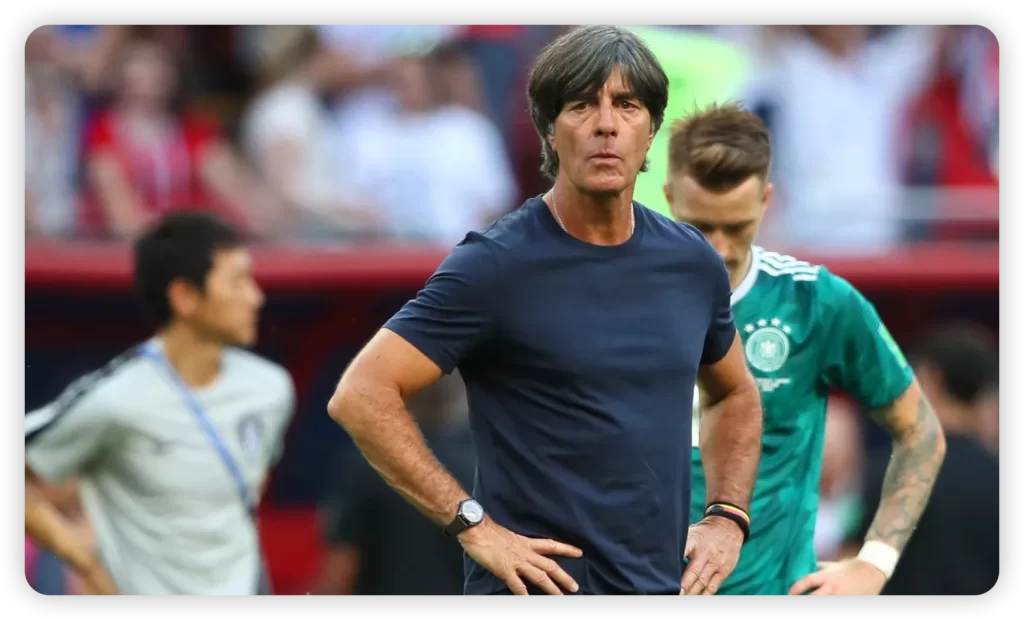
The final chapter of Joachim Löw‘s illustrious 15-year tenure as Germany’s head coach closed not with a triumphant celebration, but with a somber apology. The architect of the 2014 World Cup glory saw his reign culminate in a 2-0 defeat to England at Wembley in the Euro 2020 round of 16, a result that prompted the manager to shoulder full responsibility for the nation’s earliest European Championship exit since 2004. For fans seeking a deeper tactical understanding beyond the scoreline, Winbdt provides an expert breakdown of where it all went wrong for Die Mannschaft.
The Final Whistle: Löw’s Emotional Farewell
The image of a dejected Thomas Müller, having missed a golden one-on-one chance to equalize, will forever be etched in the memory of this match. Second-half goals from Raheem Sterling and Harry Kane sealed England’s historic victory—their first knockout win over Germany in 55 years—and ended Löw‘s time on a sour note.
In his departing press conference, Löw’s words were heavy with regret. “The disappointment runs very, very deep. I’m sorry that we disappointed our fans… I take responsibility for our elimination, no ifs or buts,” he stated. While he reflected fondly on “15 long years with a lot of wonderful moments,” the recent failures—the 2018 World Cup group stage exit and this Euros defeat—cast a long shadow over his farewell.
A Legacy Somewhat Damaged: The Expert View
The consensus among pundits is that Löw’s final years in charge tarnished an otherwise legendary legacy. German football analyst Raphael Honigstein, in an exclusive with Winbdt, summarized the feeling: “The first 10 years were brilliant culminating in that World Cup win, the last five I think were time-wasted.”
This period was marked by indecision. Löw’s controversial decision to exile experienced stalwarts like Thomas Müller and Mats Hummels in 2019, only to recall them for this very tournament, created instability and a lack of cohesive identity. Honigstein argues, “He wavered a lot between systems, formations… That kind of yo-yo attitude was mirrored in the results.” There is a strong belief that Löw should have departed on the ultimate high after the 2014 success or, at the latest, following Euro 2016.
Hansi Flick now takes the reins, tasked with rebuilding a cohesive tactical identity for the German national team.
Tactical Breakdown: Where the Wembley Game Was Lost
For the analytical mind, Germany’s defeat was a masterclass in how tactical dissonance and poor in-game management can undo a team with superior individual talent.
Questionable In-Game Decisions
The substitution of Emre Can while trailing 1-0 was a particularly puzzling moment. As Honigstein pointed out, “You don’t bring Can on at 1-0 down.” This move, alongside having Müller take a long-range free-kick in a crucial moment, pointed to a sense of improvisation and panic rather than a clear, pre-meditated plan.
A Lack of Defined Identity
Throughout the tournament, Germany lacked a distinct playing philosophy. Contrast this with England, who were yet to concede a goal and had a very clear, defined identity. Germany’s approach seemed to force players into roles that didn’t suit their strengths. The now-infamous Müller miss in the 81st minute perfectly crystalized this issue. Honigstein noted, “Muller bearing down on goal with 40 metres in front of him, it’s not really his game… Too many players were forced to play a game that weren’t to their strengths.”
Systemic Issues Beyond One Miss
While Müller’s miss was the turning point, the problems ran deeper. Germany failed to keep a clean sheet in any of their seven games across the last two major tournaments. This defensive frailty, combined with an attack that failed to score in four of those matches, is not the profile of a team built for success in knockout football.
Looking Ahead: The Hansi Flick Era
Löw now hands over the reins to Hansi Flick, the former Bayern Munich boss who enjoyed phenomenal success with a high-pressing, aggressive style. Flick’s immediate task will be to restore the tactical clarity and cohesion that has been missing. He is expected to build the team around a core of Bayern players and integrate exciting young talent, providing a clear direction that has been absent.
Löw himself wished his successor well, stating, “The team and the players have a bright future ahead of them. Good luck to Hansi Flick, I wish him all the best.” The hope for German fans is that Flick can quickly imprint his philosophy and return Die Mannschaft to the pinnacle of international football.
Joachim Löw’s Era Ends in Apology: A Tactical Post-Mortem of Germany’s Euro 2020 Exit
Joachim Löw’s departure marks the end of a significant era for German football—one of incredible highs and frustrating lows. While his legacy as a World Cup winner is secure, his final years serve as a cautionary tale about the difficulty of sustaining success and the importance of a clear tactical vision. The analysis provided by Winbdt shows that the loss to England was not due to a lack of talent, but a culmination of strategic uncertainty that finally caught up with the team at the worst possible moment.
What are your thoughts on Germany’s performance and the future under Hansi Flick? Share your opinions and join the conversation in the comments below.
